
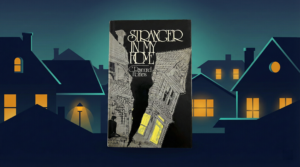
Publisher: Southern Publishing Association
Originally Published: 1974
There are books that inform, and there are books that transform. And then there are books that make you feel as though you are sitting in someone’s living room, listening to a story so raw and so honest that you forget you’re reading.
Stranger in My Home by C. Raymond Holmes is that kind of book.
I picked Stranger in My Home up shortly after the new year, and it took me about a month to finish — not because it was difficult to read, but because every chapter demanded reflection. It is the kind of book you need to pause with, sit with, and let it settle in your heart before moving on.
For those unfamiliar with the name, Dr. C. Raymond Holmes (1929–2022) was a Lutheran pastor — a successful one at that — who eventually became a Seventh-day Adventist, went on to teach homiletics at the Andrews University Theological Seminary, and became one of the founders of Adventists Affirm and the Adventist Theological Society. Many in the Adventist Church regard him as one of the greatest homilists in our history. Stranger in My Home is his retelling of how all of that began — and it began with the most unlikely of catalysts: his wife, Shirley.
The Story
Shirley Holmes was a conservative, Bible-grounded woman — modest in her lifestyle and fond of exercise. She was introduced to Seventh-day Adventism through a friend named Bertha Bigford. It all started with sports — volleyball, basketball — a friendship that blossomed over shared interests. But that friendship eventually led Shirley to a Seventh-day Adventist camp meeting, and her life was never the same.
Dr. Holmes consented to her attending. After all, he had great trust in his wife. Surely, he thought, she would see through whatever this group was teaching.
But Shirley didn’t come back the same. She was amazed by the testimonies, the sermons, the history of the Seventh-day Adventist Church, and the teaching of the Sabbath. She met people who had left Lutheranism for Adventism — and they were happy. The message was cohesive, biblical, and compelling. And yet, on her drive home, she struggled with the weight of what it would all mean if these things were true.
And that terrified Dr. Holmes.
What followed was a season of intense anguish — and Stranger in My Home was written so well that you could feel it. Dr. Holmes found himself doing things he never imagined he could do. He cursed. He shouted at his wife. He consulted three minister friends who, much like Job’s friends, offered well-meaning but misguided advice: give her an ultimatum — it’s either Adventism or her family.
But Dr. Holmes realized that their counsel was not the voice of God. He had vowed to love Shirley until death, and that vow was to take precedence over everything else.
What struck me most was how Holmes confronted not just doctrine, but his own heart. He wrestled with hatred — hatred for the Adventist people, for the Bigfords, even for his own wife. And he came to realize that harboring that anger was destroying his spiritual life, his prayer life, and his preaching. So he humbled himself. He asked Shirley for forgiveness. He asked the Bigfords for forgiveness — not because he agreed with them, but because he knew that harboring ill feelings toward anyone was incompatible with the Christian life. He even became friends with the Bigfords, eventually inviting them on a vacation to Europe.
Eventually, Dr. Holmes enrolled at Andrews University — not to convert, but to find out what Adventists truly believed. He wanted ammunition. What he found instead was a theology that was biblical, coherent, and deeply Christ-centered. He was struck by the Adventist understanding of the atonement as expressed in the sanctuary service. He was fascinated by the Adventist theology of the Lord’s Supper — discovering that Ellen White was remarkably consistent with Calvin, Luther, and Zwingli on the subject. He was moved by the Adventist balance between law and grace, and the beautiful relationship between the Old and New Testaments — not two books in tension, but two focal points of an ellipse in full agreement.
One moment that stayed with me: Dr. Holmes confided in one of his professors at Andrews, and to his shock, the professor didn’t lecture him. He didn’t debate him. He cried — not for Holmes, but with him. That taught me the importance of emotional intelligence in ministry. People don’t just need answers. They need someone willing to walk with them.
Dr. Holmes also came to accept the prophetic gift of Ellen White. She passed the biblical tests of a prophet. Her writings lifted up Scripture as the only ultimate standard of truth. And most of all, her writings lifted up Christ in all of His righteousness.
“Seventh-day Adventists do not believe that Mrs. White had a canonical mission. That is to say, God never intended us to add her writings to the Scriptures so as to enlarge the Bible. Nor were Adventists to take them as equal to the Bible. However, Adventists do welcome and receive them as inspired counsel and as inspired commentary on the Word of God.” — p. 98
“In the writings of Mrs. White, which certainly earn her credit as a theologian of the first rank, we find a beautifully consistent interpretation of the Word of God, an interpretation which has as its apex and center the person of Jesus Christ.” — p. 98
Then came the question of his vows. Dr. Holmes had vowed himself to the gospel ministry as a Lutheran pastor. Did following truth mean breaking that vow? He came to realize that his vow was never to the Lutheran Church as an institution — it was to the Lord, to the Word of God, and to the principle of sola Scriptura. And that very principle now demanded that he follow the Bible wherever it led, even out of Lutheranism.
One by one — the Sabbath, the remnant church, the sanctuary, the prophetic timeline of Daniel and Revelation — truth after truth, God sealed his decision. On April 24, 1971, Dr. C. Raymond Holmes was baptized at Andrews University by Dr. Thomas Blincoe.
He was installed as an associate pastor at the Battle Creek Tabernacle Church — the mother church of the Seventh-day Adventist Church. On January 27, 1973, he was ordained as a Seventh-day Adventist pastor. And after years of anguish, prayer, study, and surrender, he and Shirley were finally reunited — not just as husband and wife, but as a gospel team. They were no longer strangers to each other. The title of the book, once a lament, had become a testimony.
The epilogue, written by Wilbur Alexander, urges us to strain forward — just as Dr. Holmes strained forward even at the cost of his promotion, his identity as a Lutheran minister, and the comforts of familiarity. He counted it all loss in order to gain Christ and His truth.
Lessons from the Book
As a pastor and church planter, I found myself pausing on nearly every page. Here are some of the key lessons I took away:
The Bible must be the foundation of our preaching. If the Bible is not a revelation of God and from God, then there is no authority for preaching. Without the conviction that God has spoken, we have nothing to say.
Justification and sanctification must go together. Without reconciliation, man has no salvation. Without sanctification, he has no victory over sin. Both are necessary. Both are gifts of grace.
We must preach evangelistically. Dr. Holmes committed to at least one two-week evangelistic series per year and made it a point in every sermon to call people to a decision for the gospel. That challenged me deeply.
Use every facet of life to connect people to truth. Shirley didn’t find the Adventist Church through a Bible study or a knock on the door. She found it through basketball. The mission field is wherever we are.
Allow people to struggle. We must not be afraid of placing people in uncomfortable situations. God Himself does this — disrupting our preconceived ideas so that He can replace them with truth. The Bigfords were patient enough to let God work, and so should we.
Walk with people in their doubts. We must be persons willing not only to talk, but to walk with people through their questions. The image of that professor crying with Dr. Holmes is one I won’t soon forget.
Hatred destroys the one who harbors it. Disagreement is one thing. Hatred is another. And the latter will consume your prayer life, your spiritual vitality, and your ministry if left unchecked.
Uphold the Lord’s Supper. The Adventist Church has a rich, Christ-centered theology of the Lord’s Supper — one that even a Lutheran scholar found compelling. We should not let this ordinance become routine.
The vow of sola Scriptura leads to truth. If you truly commit to following the Bible wherever it leads, it will lead you somewhere. Dr. Holmes made that commitment as a Lutheran — and it led him to Adventism.
Notable Quotes
“Christ did not die on the cross so that we can learn how to live with our sin. He died in order that we might have victory over it.” — p. 29
“It is only the redeemed and forgiven sinner who can experience victory over sin, because Christ does not command the impossible. What He commands us, He gives grace — the strength and ability — to do.” — p. 29
“Both justification and sanctification are necessary in the Christian’s experience. Without reconciliation man has no salvation, and without sanctification he has no victory over sins.” — p. 29
“It is easy to forget that what God wants accomplished in us, He, by His Spirit, undertakes to do for us.” — p. 30
“One of the most amazing truths about this business of being a servant of the Word is that God uses you in spite of yourself, and in spite of what others might think of you.” — p. 67
“But the gospel was never intended to please man; it is to save him!” — p. 70
“Methods must change with the times; but today the message is being changed, and that’s fatal! One message! One way! God’s way!” — p. 70
“The person who thinks he has arrived at full maturity of faith and discipleship and has no need to grow, has already begun to die!” — p. 72
“Sabbath rest begins when we rest from sin by faith in the Sin Bearer and Saviour.” — p. 89
Final Thoughts
Stranger in My Home is not just a conversion story. It is a book about honesty, about the cost of following truth, and about the God who is patient enough to lead us — even when we are kicking and screaming along the way.
To read the story of how God led a man from Lutheranism to Adventism, and ultimately to a lifetime of defending and advancing Adventist theology, is both humbling and inspiring.
It all started because a woman named Bertha Bigford invited Shirley to play sports. God works in mysterious ways indeed.
If you are a pastor, Stranger in My Home will sharpen your ministry philosophy. If you are a Bible worker or an evangelist, this book will challenge the way you approach people. If you are simply a Christian trying to understand what it means to follow truth no matter the cost, this book will speak to your heart.
Stranger in My Home is old, originally published in 1974, and copies are hard to come by. But if you can get your hands on one, by all means, buy it and read it. I highly recommend it.
Summary, verdict and frequently asked questions
A reference summary compiled from the review above. It is not part of the original review.
Book Review Summary
Stranger in My Home at a glance


Stranger in My Home is best for: pastors, Bible workers, evangelists, and any Christian counting the cost of following truth.
Author: C. Raymond Holmes. Published: 1974, Southern Publishing Association.
Verdict: highly recommended. Hard to find, but worth the hunt.
Why Stranger in My Home still matters

“Christ did not die on the cross so that we can learn how to live with our sin. He died in order that we might have victory over it.” — p. 29
Half a century after it was published, the questions Stranger in My Home raises have not aged. Denominational lines still run through families. People still discover a conviction that costs them something, and still have to decide whether comfort or Scripture gets the final word. Holmes does not pretend that decision was clean for him. He shouted at his wife. He nursed a hatred he was ashamed of. He took bad advice from good men.
That honesty is what makes the book worth handing to someone who is struggling. It does not present conversion as a tidy argument won on the strength of better proof texts. It presents a marriage under strain, a vocation in question, and a God patient enough to work through both. For a pastor, that is a more useful picture than any apologetics manual, because it is the picture your members actually live in.
It is also a reminder of how little control we have over the moment God chooses. Shirley did not attend an evangelistic series. She played volleyball with a friend. Stranger in My Home makes the case, without ever stating it directly, that faithfulness in ordinary friendship does more evangelistic work than most of what we plan and budget for.
Frequently asked questions about Stranger in My Home
What is Stranger in My Home about? It is C. Raymond Holmes telling how he moved from being a successful Lutheran pastor to a Seventh-day Adventist one. The catalyst was his wife Shirley, who was introduced to Adventism through a friend, Bertha Bigford, and a shared love of sports.
Who was C. Raymond Holmes? Dr. C. Raymond Holmes (1929 to 2022) taught homiletics at the Andrews University Theological Seminary and helped found Adventists Affirm and the Adventist Theological Society. Many in the Adventist Church regard him as one of its finest preachers.
Is Stranger in My Home only for Adventists? No. It is a conversion story, but the deeper subject is honesty, the cost of following truth, and how patiently God works with someone who is resisting. Any Christian wrestling with conviction will recognize the territory.
What are the main lessons? That the Bible must be the foundation of preaching, that justification and sanctification belong together, that hatred destroys whoever harbors it, and that we should walk with people through their doubts rather than only argue with them.
Where can I buy Stranger in My Home? That is the hard part. It was published in 1974 by the Southern Publishing Association and has long been out of print, so copies surface mainly through secondhand sellers and church libraries. If you find one, buy it.
How long does it take to read? It took me about a month, not because it is difficult but because nearly every chapter asks you to stop and think. Stranger in My Home is short enough to finish in a weekend if you push, though I would not recommend it.
What should I read next? If you want something on the daily texture of pastoral work, try my review of Letters to a Young Pastor or Pastoring Small Towns.
This Stranger in My Home book review was written by Arnold Famini, a pastor and church planter in Manila. Browse more book reviews by Arnold Famini or the sermon archive.