
The Sermonic Calendar 2026 is a free sermon planning spreadsheet for pastors, elders, and lay preachers who want to bring intentionality to their preaching ministry.
Planning your sermons doesn’t have to be chaotic. With the Sermonic Calendar 2026, you can see all 52 Sabbaths at a glance, organize your sermon series by month, and track your topics throughout the year. No more scrambling on Thursday night wondering what to preach.
This spreadsheet includes three tabs:
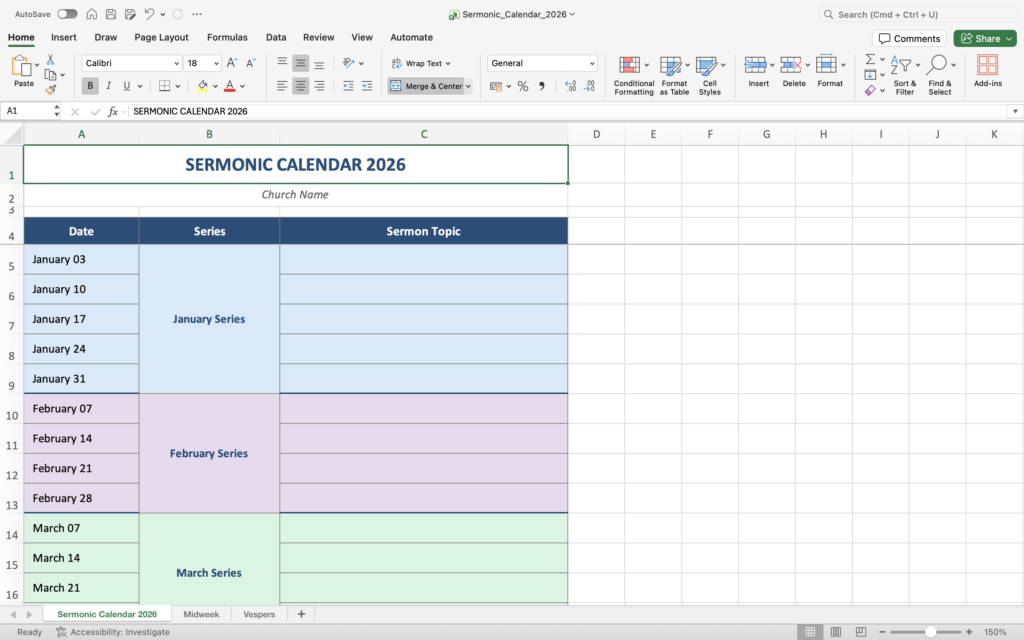
- Sermonic Calendar — All Sabbaths with space for your series themes and sermon topics, color-coded by month
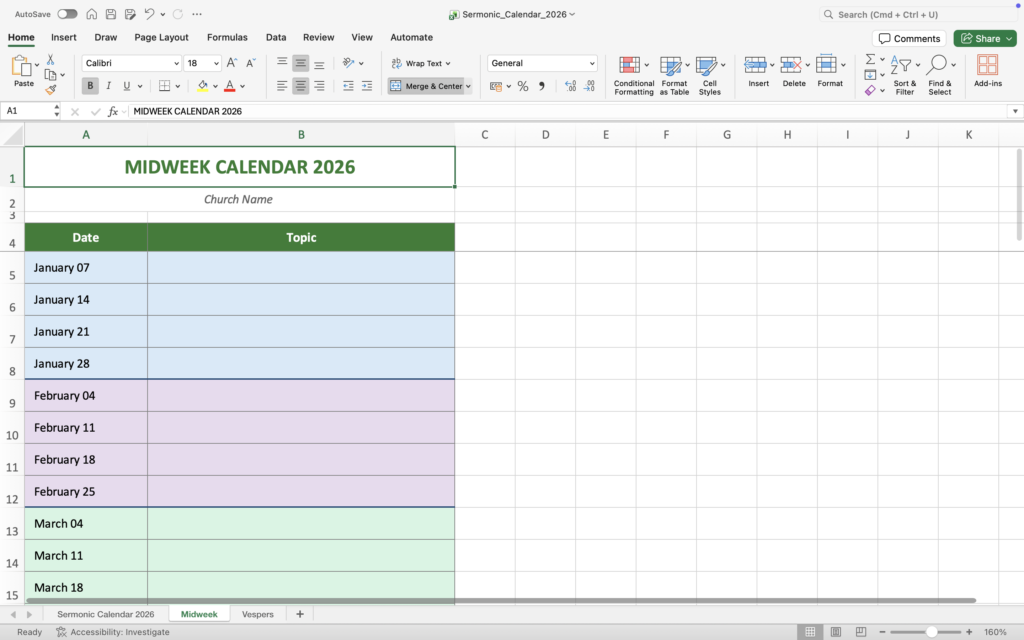
- Midweek — Every Wednesday for your midweek services
- Vespers — Every Friday for your vespers programs
I created this because I needed it myself. As pastors, we’re often so busy caring for others that we neglect the planning that makes our preaching more effective. This simple tool has helped me think ahead, pray over my sermon calendar, and preach with purpose rather than panic.
Download it, customize it for your church, and preach the Word with intentionality this 2026. If it saves you one frantic Thursday night, it has already earned the ten minutes it takes to set up, and my hope is that it saves you a good many more than just the one.
Full guide: how to plan a preaching year, worked example and FAQ
Reference material prepared to accompany this resource. It is not written by Arnold Famini.
Why plan a preaching year at all
%22%20stroke%3D%22%2367e8f9%22%20stroke-width%3D%221.5%22%2F%3E%3Ccircle%20cx%3D%2235%22%20cy%3D%2228%22%20r%3D%223.2%22%20fill%3D%22%2367e8f9%22%20opacity%3D%220.35%22%2F%3E%3Ccircle%20cx%3D%2235%22%20cy%3D%2239%22%20r%3D%223.2%22%20fill%3D%22%2367e8f9%22%20opacity%3D%220.55%22%2F%3E%3Ccircle%20cx%3D%2235%22%20cy%3D%2250%22%20r%3D%223.2%22%20fill%3D%22%2367e8f9%22%20opacity%3D%220.75%22%2F%3E%3Ccircle%20cx%3D%2235%22%20cy%3D%2261%22%20r%3D%223.2%22%20fill%3D%22%2367e8f9%22%20opacity%3D%220.9500000000000001%22%2F%3E%3Ctext%20x%3D%2235%22%20y%3D%2284%22%20font-family%3D%22sans-serif%22%20font-size%3D%2213%22%20fill%3D%22%23c9cede%22%20text-anchor%3D%22middle%22%3EJ%3C%2Ftext%3E%3Crect%20x%3D%2264%22%20y%3D%2216%22%20width%3D%2238%22%20height%3D%2252%22%20rx%3D%226%22%20fill%3D%22rgba(103%2C232%2C249%2C0.10)%22%20stroke%3D%22%2367e8f9%22%20stroke-width%3D%221.5%22%2F%3E%3Ccircle%20cx%3D%2283%22%20cy%3D%2228%22%20r%3D%223.2%22%20fill%3D%22%2367e8f9%22%20opacity%3D%220.35%22%2F%3E%3Ccircle%20cx%3D%2283%22%20cy%3D%2239%22%20r%3D%223.2%22%20fill%3D%22%2367e8f9%22%20opacity%3D%220.55%22%2F%3E%3Ccircle%20cx%3D%2283%22%20cy%3D%2250%22%20r%3D%223.2%22%20fill%3D%22%2367e8f9%22%20opacity%3D%220.75%22%2F%3E%3Ccircle%20cx%3D%2283%22%20cy%3D%2261%22%20r%3D%223.2%22%20fill%3D%22%2367e8f9%22%20opacity%3D%220.9500000000000001%22%2F%3E%3Ctext%20x%3D%2283%22%20y%3D%2284%22%20font-family%3D%22sans-serif%22%20font-size%3D%2213%22%20fill%3D%22%23c9cede%22%20text-anchor%3D%22middle%22%3EF%3C%2Ftext%3E%3Crect%20x%3D%22112%22%20y%3D%2216%22%20width%3D%2238%22%20height%3D%2252%22%20rx%3D%226%22%20fill%3D%22rgba(103%2C232%2C249%2C0.10)%22%20stroke%3D%22%2367e8f9%22%20stroke-width%3D%221.5%22%2F%3E%3Ccircle%20cx%3D%22131%22%20cy%3D%2228%22%20r%3D%223.2%22%20fill%3D%22%2367e8f9%22%20opacity%3D%220.35%22%2F%3E%3Ccircle%20cx%3D%22131%22%20cy%3D%2239%22%20r%3D%223.2%22%20fill%3D%22%2367e8f9%22%20opacity%3D%220.55%22%2F%3E%3Ccircle%20cx%3D%22131%22%20cy%3D%2250%22%20r%3D%223.2%22%20fill%3D%22%2367e8f9%22%20opacity%3D%220.75%22%2F%3E%3Ccircle%20cx%3D%22131%22%20cy%3D%2261%22%20r%3D%223.2%22%20fill%3D%22%2367e8f9%22%20opacity%3D%220.9500000000000001%22%2F%3E%3Ctext%20x%3D%22131%22%20y%3D%2284%22%20font-family%3D%22sans-serif%22%20font-size%3D%2213%22%20fill%3D%22%23c9cede%22%20text-anchor%3D%22middle%22%3EM%3C%2Ftext%3E%3Crect%20x%3D%22160%22%20y%3D%2216%22%20width%3D%2238%22%20height%3D%2252%22%20rx%3D%226%22%20fill%3D%22rgba(103%2C232%2C249%2C0.10)%22%20stroke%3D%22%2367e8f9%22%20stroke-width%3D%221.5%22%2F%3E%3Ccircle%20cx%3D%22179%22%20cy%3D%2228%22%20r%3D%223.2%22%20fill%3D%22%2367e8f9%22%20opacity%3D%220.35%22%2F%3E%3Ccircle%20cx%3D%22179%22%20cy%3D%2239%22%20r%3D%223.2%22%20fill%3D%22%2367e8f9%22%20opacity%3D%220.55%22%2F%3E%3Ccircle%20cx%3D%22179%22%20cy%3D%2250%22%20r%3D%223.2%22%20fill%3D%22%2367e8f9%22%20opacity%3D%220.75%22%2F%3E%3Ccircle%20cx%3D%22179%22%20cy%3D%2261%22%20r%3D%223.2%22%20fill%3D%22%2367e8f9%22%20opacity%3D%220.9500000000000001%22%2F%3E%3Ctext%20x%3D%22179%22%20y%3D%2284%22%20font-family%3D%22sans-serif%22%20font-size%3D%2213%22%20fill%3D%22%23c9cede%22%20text-anchor%3D%22middle%22%3EA%3C%2Ftext%3E%3Crect%20x%3D%22208%22%20y%3D%2216%22%20width%3D%2238%22%20height%3D%2252%22%20rx%3D%226%22%20fill%3D%22rgba(103%2C232%2C249%2C0.10)%22%20stroke%3D%22%2367e8f9%22%20stroke-width%3D%221.5%22%2F%3E%3Ccircle%20cx%3D%22227%22%20cy%3D%2228%22%20r%3D%223.2%22%20fill%3D%22%2367e8f9%22%20opacity%3D%220.35%22%2F%3E%3Ccircle%20cx%3D%22227%22%20cy%3D%2239%22%20r%3D%223.2%22%20fill%3D%22%2367e8f9%22%20opacity%3D%220.55%22%2F%3E%3Ccircle%20cx%3D%22227%22%20cy%3D%2250%22%20r%3D%223.2%22%20fill%3D%22%2367e8f9%22%20opacity%3D%220.75%22%2F%3E%3Ccircle%20cx%3D%22227%22%20cy%3D%2261%22%20r%3D%223.2%22%20fill%3D%22%2367e8f9%22%20opacity%3D%220.9500000000000001%22%2F%3E%3Ctext%20x%3D%22227%22%20y%3D%2284%22%20font-family%3D%22sans-serif%22%20font-size%3D%2213%22%20fill%3D%22%23c9cede%22%20text-anchor%3D%22middle%22%3EM%3C%2Ftext%3E%3Crect%20x%3D%22256%22%20y%3D%2216%22%20width%3D%2238%22%20height%3D%2252%22%20rx%3D%226%22%20fill%3D%22rgba(103%2C232%2C249%2C0.10)%22%20stroke%3D%22%2367e8f9%22%20stroke-width%3D%221.5%22%2F%3E%3Ccircle%20cx%3D%22275%22%20cy%3D%2228%22%20r%3D%223.2%22%20fill%3D%22%2367e8f9%22%20opacity%3D%220.35%22%2F%3E%3Ccircle%20cx%3D%22275%22%20cy%3D%2239%22%20r%3D%223.2%22%20fill%3D%22%2367e8f9%22%20opacity%3D%220.55%22%2F%3E%3Ccircle%20cx%3D%22275%22%20cy%3D%2250%22%20r%3D%223.2%22%20fill%3D%22%2367e8f9%22%20opacity%3D%220.75%22%2F%3E%3Ccircle%20cx%3D%22275%22%20cy%3D%2261%22%20r%3D%223.2%22%20fill%3D%22%2367e8f9%22%20opacity%3D%220.9500000000000001%22%2F%3E%3Ctext%20x%3D%22275%22%20y%3D%2284%22%20font-family%3D%22sans-serif%22%20font-size%3D%2213%22%20fill%3D%22%23c9cede%22%20text-anchor%3D%22middle%22%3EJ%3C%2Ftext%3E%3Crect%20x%3D%22304%22%20y%3D%2216%22%20width%3D%2238%22%20height%3D%2252%22%20rx%3D%226%22%20fill%3D%22rgba(103%2C232%2C249%2C0.10)%22%20stroke%3D%22%2367e8f9%22%20stroke-width%3D%221.5%22%2F%3E%3Ccircle%20cx%3D%22323%22%20cy%3D%2228%22%20r%3D%223.2%22%20fill%3D%22%2367e8f9%22%20opacity%3D%220.35%22%2F%3E%3Ccircle%20cx%3D%22323%22%20cy%3D%2239%22%20r%3D%223.2%22%20fill%3D%22%2367e8f9%22%20opacity%3D%220.55%22%2F%3E%3Ccircle%20cx%3D%22323%22%20cy%3D%2250%22%20r%3D%223.2%22%20fill%3D%22%2367e8f9%22%20opacity%3D%220.75%22%2F%3E%3Ccircle%20cx%3D%22323%22%20cy%3D%2261%22%20r%3D%223.2%22%20fill%3D%22%2367e8f9%22%20opacity%3D%220.9500000000000001%22%2F%3E%3Ctext%20x%3D%22323%22%20y%3D%2284%22%20font-family%3D%22sans-serif%22%20font-size%3D%2213%22%20fill%3D%22%23c9cede%22%20text-anchor%3D%22middle%22%3EJ%3C%2Ftext%3E%3Crect%20x%3D%22352%22%20y%3D%2216%22%20width%3D%2238%22%20height%3D%2252%22%20rx%3D%226%22%20fill%3D%22rgba(103%2C232%2C249%2C0.10)%22%20stroke%3D%22%2367e8f9%22%20stroke-width%3D%221.5%22%2F%3E%3Ccircle%20cx%3D%22371%22%20cy%3D%2228%22%20r%3D%223.2%22%20fill%3D%22%2367e8f9%22%20opacity%3D%220.35%22%2F%3E%3Ccircle%20cx%3D%22371%22%20cy%3D%2239%22%20r%3D%223.2%22%20fill%3D%22%2367e8f9%22%20opacity%3D%220.55%22%2F%3E%3Ccircle%20cx%3D%22371%22%20cy%3D%2250%22%20r%3D%223.2%22%20fill%3D%22%2367e8f9%22%20opacity%3D%220.75%22%2F%3E%3Ccircle%20cx%3D%22371%22%20cy%3D%2261%22%20r%3D%223.2%22%20fill%3D%22%2367e8f9%22%20opacity%3D%220.9500000000000001%22%2F%3E%3Ctext%20x%3D%22371%22%20y%3D%2284%22%20font-family%3D%22sans-serif%22%20font-size%3D%2213%22%20fill%3D%22%23c9cede%22%20text-anchor%3D%22middle%22%3EA%3C%2Ftext%3E%3Crect%20x%3D%22400%22%20y%3D%2216%22%20width%3D%2238%22%20height%3D%2252%22%20rx%3D%226%22%20fill%3D%22rgba(103%2C232%2C249%2C0.10)%22%20stroke%3D%22%2367e8f9%22%20stroke-width%3D%221.5%22%2F%3E%3Ccircle%20cx%3D%22419%22%20cy%3D%2228%22%20r%3D%223.2%22%20fill%3D%22%2367e8f9%22%20opacity%3D%220.35%22%2F%3E%3Ccircle%20cx%3D%22419%22%20cy%3D%2239%22%20r%3D%223.2%22%20fill%3D%22%2367e8f9%22%20opacity%3D%220.55%22%2F%3E%3Ccircle%20cx%3D%22419%22%20cy%3D%2250%22%20r%3D%223.2%22%20fill%3D%22%2367e8f9%22%20opacity%3D%220.75%22%2F%3E%3Ccircle%20cx%3D%22419%22%20cy%3D%2261%22%20r%3D%223.2%22%20fill%3D%22%2367e8f9%22%20opacity%3D%220.9500000000000001%22%2F%3E%3Ctext%20x%3D%22419%22%20y%3D%2284%22%20font-family%3D%22sans-serif%22%20font-size%3D%2213%22%20fill%3D%22%23c9cede%22%20text-anchor%3D%22middle%22%3ES%3C%2Ftext%3E%3Crect%20x%3D%22448%22%20y%3D%2216%22%20width%3D%2238%22%20height%3D%2252%22%20rx%3D%226%22%20fill%3D%22rgba(103%2C232%2C249%2C0.10)%22%20stroke%3D%22%2367e8f9%22%20stroke-width%3D%221.5%22%2F%3E%3Ccircle%20cx%3D%22467%22%20cy%3D%2228%22%20r%3D%223.2%22%20fill%3D%22%2367e8f9%22%20opacity%3D%220.35%22%2F%3E%3Ccircle%20cx%3D%22467%22%20cy%3D%2239%22%20r%3D%223.2%22%20fill%3D%22%2367e8f9%22%20opacity%3D%220.55%22%2F%3E%3Ccircle%20cx%3D%22467%22%20cy%3D%2250%22%20r%3D%223.2%22%20fill%3D%22%2367e8f9%22%20opacity%3D%220.75%22%2F%3E%3Ccircle%20cx%3D%22467%22%20cy%3D%2261%22%20r%3D%223.2%22%20fill%3D%22%2367e8f9%22%20opacity%3D%220.9500000000000001%22%2F%3E%3Ctext%20x%3D%22467%22%20y%3D%2284%22%20font-family%3D%22sans-serif%22%20font-size%3D%2213%22%20fill%3D%22%23c9cede%22%20text-anchor%3D%22middle%22%3EO%3C%2Ftext%3E%3Crect%20x%3D%22496%22%20y%3D%2216%22%20width%3D%2238%22%20height%3D%2252%22%20rx%3D%226%22%20fill%3D%22rgba(103%2C232%2C249%2C0.10)%22%20stroke%3D%22%2367e8f9%22%20stroke-width%3D%221.5%22%2F%3E%3Ccircle%20cx%3D%22515%22%20cy%3D%2228%22%20r%3D%223.2%22%20fill%3D%22%2367e8f9%22%20opacity%3D%220.35%22%2F%3E%3Ccircle%20cx%3D%22515%22%20cy%3D%2239%22%20r%3D%223.2%22%20fill%3D%22%2367e8f9%22%20opacity%3D%220.55%22%2F%3E%3Ccircle%20cx%3D%22515%22%20cy%3D%2250%22%20r%3D%223.2%22%20fill%3D%22%2367e8f9%22%20opacity%3D%220.75%22%2F%3E%3Ccircle%20cx%3D%22515%22%20cy%3D%2261%22%20r%3D%223.2%22%20fill%3D%22%2367e8f9%22%20opacity%3D%220.9500000000000001%22%2F%3E%3Ctext%20x%3D%22515%22%20y%3D%2284%22%20font-family%3D%22sans-serif%22%20font-size%3D%2213%22%20fill%3D%22%23c9cede%22%20text-anchor%3D%22middle%22%3EN%3C%2Ftext%3E%3Crect%20x%3D%22544%22%20y%3D%2216%22%20width%3D%2238%22%20height%3D%2252%22%20rx%3D%226%22%20fill%3D%22rgba(103%2C232%2C249%2C0.10)%22%20stroke%3D%22%2367e8f9%22%20stroke-width%3D%221.5%22%2F%3E%3Ccircle%20cx%3D%22563%22%20cy%3D%2228%22%20r%3D%223.2%22%20fill%3D%22%2367e8f9%22%20opacity%3D%220.35%22%2F%3E%3Ccircle%20cx%3D%22563%22%20cy%3D%2239%22%20r%3D%223.2%22%20fill%3D%22%2367e8f9%22%20opacity%3D%220.55%22%2F%3E%3Ccircle%20cx%3D%22563%22%20cy%3D%2250%22%20r%3D%223.2%22%20fill%3D%22%2367e8f9%22%20opacity%3D%220.75%22%2F%3E%3Ccircle%20cx%3D%22563%22%20cy%3D%2261%22%20r%3D%223.2%22%20fill%3D%22%2367e8f9%22%20opacity%3D%220.9500000000000001%22%2F%3E%3Ctext%20x%3D%22563%22%20y%3D%2284%22%20font-family%3D%22sans-serif%22%20font-size%3D%2213%22%20fill%3D%22%23c9cede%22%20text-anchor%3D%22middle%22%3ED%3C%2Ftext%3E%3Ctext%20x%3D%2216%22%20y%3D%22104%22%20font-family%3D%22sans-serif%22%20font-size%3D%2211%22%20fill%3D%22%238a8fa3%22%3E52%20Sabbaths%20across%2012%20months%3C%2Ftext%3E%3C%2Fsvg%3E)
Most of us do not avoid sermon planning because we think it is a bad idea. We avoid it because the urgent work of a week always arrives before the important work of a year does. Hospital visits, board meetings, a funeral nobody expected. Thursday comes, nothing is prepared, and you preach whatever you can carry.
The cost of that is not usually a bad sermon. It is a lopsided diet. Preach reactively for twelve months and you will find you returned to the same handful of themes repeatedly, avoided the passages you find difficult, and never once worked through a book of the Bible from start to finish. Your congregation ate whatever was quickest to cook.
A preaching calendar does not make you less spiritual or less responsive to the Spirit. It just moves the thinking earlier, when you have the margin to pray over a whole year rather than a single Sabbath.
What is inside the Sermonic Calendar 2026

The Sermonic Calendar tab is the main sheet. Every Sabbath in 2026 is listed with space beside it for a series theme and a sermon topic, color blocked by month so you can see at a glance where a series starts and stops.
The Midweek tab lists every Wednesday, which most churches treat as a separate teaching track. It is deliberately simpler, because midweek studies are usually sequential and need less orchestration than a Sabbath series.
The Vespers tab lists every Friday. In my experience this is the sheet that stays emptiest and matters more than we admit, because vespers is often where the younger members of a church actually engage.
Nothing in the spreadsheet is locked. Change the tab names, add columns for the preacher or the passage, delete the tabs you do not use. It is a starting grid, not a system.
How to fill in your sermon calendar
Start with the fixed points. Before you plan a single sermon, mark the dates that are already decided: communion Sabbaths, baptisms, camp meeting, evangelistic series, the weeks you will be away, and the Sabbaths a guest is preaching. On a typical year that accounts for a surprising share of the calendar, and it is far easier to plan around those than to discover them mid-series.
Then block the series. Four to six weeks is the sweet spot. Shorter than four and a series does not build; longer than six and attendance patterns mean a good portion of your congregation will only catch half of it. Write the series name across the block before you name any individual sermon.
Then balance the year. Look at the blocks together and check the mix. Old Testament against New. Doctrinal against practical. Something evangelistic, something devotional, something that will make people uncomfortable. If every block is from the epistles, you have found a habit worth breaking.
Only then name individual sermons. And leave gaps deliberately. A calendar with every Sabbath filled in January is a calendar you will abandon by March, because it has no room for the sermon this year actually asks for.
How far ahead should you plan?
A year at series level, a quarter at sermon level, a week at manuscript level. That is the rhythm that has worked for me. You know the shape of the whole year, you know the specific topics for the next three months, and you are writing one sermon at a time.
Planning individual sermons twelve months out is a trap. Congregations change, circumstances change, and you will resent a decision made by a version of yourself who did not know what was coming. Series-level planning is stable enough to survive a year. Sermon-level planning usually is not.
If your church follows the Sabbath School quarterly, the quarterly boundaries give you a natural planning cycle. Plan your preaching quarter during the last month of the previous one, when you can already see what the lessons will cover and can either reinforce it or deliberately give people something different.
Common sermon planning mistakes
Planning alone. Show the draft calendar to your elders, your worship team, and whoever runs the children’s program. They will tell you about three events you did not know about, and they can prepare properly when they know what is coming.
Treating the calendar as a contract. It is a plan, not a vow. When a church goes through something that demands a different word, change it. The calendar exists to save you from drift, not from the Spirit.
Forgetting the follow-through. A series is far more useful when the small groups, the midweek study, and the bulletin all point in the same direction. The Sermonic Calendar 2026 gives you the shape early enough that other ministries can build on it.
Never reviewing it. At the end of the year, read back through what you actually preached. The gap between the plan and the reality is the single most useful piece of feedback you will get, and almost nobody looks at it.
Choosing what to preach: series types that work
Once the fixed dates are on your preaching calendar, the real question arrives. What actually goes in the blocks? There are four series types I keep returning to, and a healthy year usually contains some of each.
Expository book series. You take a book of the Bible and work through it. This is the backbone of most good sermon planning because the text sets the agenda instead of you. It forces you into passages you would never choose, which is precisely the value. Start with a short book if your congregation is not used to it. Philippians, Ruth, Jonah, 1 John.
Character series. Four to six weeks on one biblical life. These are easy to follow and easy to invite friends to, because narrative preaching travels well to people who do not yet know the Bible. Elijah, Joseph, Peter and David all carry a series comfortably.
Doctrinal series. The sanctuary, the state of the dead, the Sabbath, righteousness by faith. Congregations need these, and they age badly when left to chance, because the doctrinal sermon is exactly the one that gets crowded out by the urgent. Schedule it or it will not happen.
Felt-need series. Anxiety, money, marriage, grief, forgiveness. These draw the widest hearing and carry the greatest risk, because it is easy to end up preaching self-help with a text attached. Plan these with the passage first and the need second, never the reverse.
A worked example: the first quarter of 2026
Here is roughly how I would fill the first thirteen Sabbaths, to show what the sermon calendar looks like once it has something in it.
January. Open the year with a short three-week series on renewal, because people are already thinking about change and it costs nothing to meet them there. Reserve the fourth Sabbath for communion.
February. A five-week expository series. February is the quietest month in most church calendars, with no major events competing for attention, which makes it the best month of the year for sustained teaching. This is where a book series belongs.
March. A four-week character series, deliberately invitational, leading into whatever evangelistic emphasis the church has planned for the second quarter. Leave the final Sabbath of the quarter open. Something will need it.
That is twelve of thirteen Sabbaths planned, one held in reserve, and every one of them decided in December rather than on a Thursday night. The point of the Sermonic Calendar 2026 is not the spreadsheet. It is that this thinking happens once, calmly, instead of fifty-two times under pressure.
Preaching through a book versus topical series
This debate generates more heat than it deserves, and the honest answer is that a preaching calendar needs both. Book series protect you from your own preferences. Topical series let you address what a congregation is actually carrying this year.
What matters is the ratio. If a year contains no book series at all, your preaching will slowly narrow to your favorite themes without you noticing. If it contains nothing but book series, you may work through Romans while a third of your members are quietly drowning in debt and never hear a sermon about money.
A rough target is half and half, with the book series carrying the longer blocks and topical series filling the shorter ones. Write both onto the sermon calendar in different colors and you can see the balance in a glance, which is much harder to judge from memory.
Where sermon planning meets prayer
I want to be careful here, because sermon planning can quietly become project management with a devotional veneer. The calendar is a tool. It is not discernment.
What I have found is that planning early actually creates more room for prayer, not less. When the year’s shape is decided in advance, I spend the week before a series praying about the people who will hear it rather than scrambling to decide what it is about. The administrative decision and the spiritual one stop competing for the same Thursday.
It also means you can pray over the hard Sabbaths well ahead. You know in January that a difficult doctrinal series lands in August. That is seven months to pray about how to say it, and to notice whether your motive for saying it stays clean.
And keep the calendar loose enough to be interrupted. Every pastor has had the year where a death, a scandal, or a crisis in the community made the planned sermon impossible. A preaching calendar that cannot absorb that is too tightly built. Mine gets edited every year, and I have never once regretted having made it.
Using the calendar across a district
Many of us do not pastor one church. We pastor three or five, spread across a district, preaching in a different building most Sabbaths on a rotation that somebody drew up years ago and nobody has revisited since.
The sermon calendar handles this well with one change: duplicate the main tab once per congregation. What you gain immediately is visibility of the thing district pastors most often lose track of, which is what each individual church has actually heard. It is uncomfortably common to discover you preached the same four sermons in rotation to five congregations and gave none of them a coherent series.
The other district-specific use is planning which church gets which series. A congregation in the middle of a leadership conflict needs different preaching from one that has just planted. Seeing all of them side by side on one preaching calendar makes those decisions visible rather than accidental.
If lay preachers cover the Sabbaths you cannot, add their names to the sheet and share it. Most lay preachers are given a date and no direction at all. Handing them a series theme and a passage three months ahead transforms what they bring.
Track what you actually preached
The most valuable column in my own sermon planning sheet is the one I add at the end of the year: what I really preached, next to what I said I would.
It takes an hour in December and it tells you things nothing else will. Which series ran long. Which topics you quietly dropped. How many Sabbaths went to guests. Whether the balance you designed in January survived contact with the year. Mine rarely does, and the pattern of how it fails is the useful part.
Keep the completed sheets. After three or four years you have a genuine record of your preaching ministry in one place, and when you arrive at a new district you can answer the question that matters when planning your first year there: what has this congregation not heard in a long time?
Frequently asked questions about the Sermonic Calendar 2026
Is the Sermonic Calendar 2026 free? Yes. Download the spreadsheet above. No sign-up, no email required, and you are welcome to share it with other preachers.
What format is it? An .xlsx spreadsheet. It opens in Microsoft Excel, and uploads cleanly to Google Sheets if you would rather plan somewhere your team can edit alongside you.
Is it only for Seventh-day Adventist churches? The Sabbath, midweek and vespers structure reflects Adventist practice, but the sheet is just dates and columns. Change the tab labels to Sunday and it works for any congregation.
How long does it take to fill in? Blocking out a full year at series level takes about two hours if you have your church calendar in front of you. The fixed dates take twenty minutes, the series blocks take an hour, and the balancing takes the rest. It is the cheapest two hours of sermon planning you will spend all year.
What if my church board sets the calendar? Bring a filled-in draft to the meeting rather than a blank one. Boards are far quicker to approve a preaching calendar that already exists than to build one from scratch around a table.
Can I use it for a preaching team? Yes. Add a column for the preacher and it doubles as a rota. That is how most multi-preacher churches end up using it.
Can I use the Sermonic Calendar 2026 if the year has already started? Yes. Delete the weeks that have passed and plan from where you are. A preaching calendar built in March covering ten months is worth far more than one you postpone to next January.
Will there be a 2027 version? Yes, usually late in the preceding year. The structure stays the same, only the dates change.
The Sermonic Calendar 2026 was built by Arnold Famini, a pastor and church planter in Manila. Pair it with the Book of Acts 40 Day Reading Plan, browse more free resources, or visit the sermon archive.